
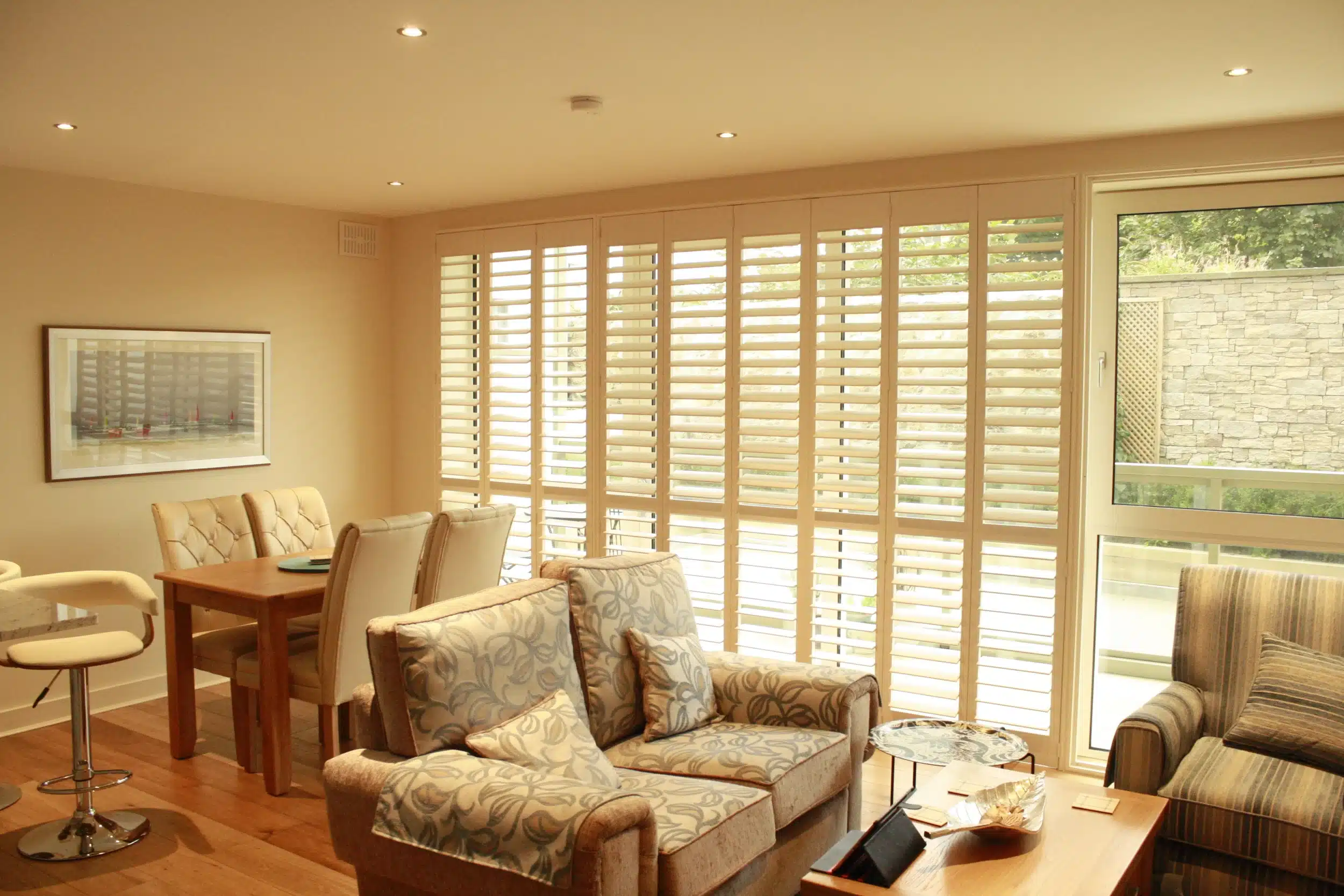
Every winter, homeowners in Washington Park Historic District face the same frustrating reality: cold air streaming through original single-pane windows, Ameren Illinois bills climbing past $300 monthly, and the knowledge that replacing those irreplaceable Victorian windows would destroy their home’s character forever. If your historic South Springfield home forces you to choose between authenticity and comfort, you haven’t found the right solution yet.
Interior shutters designed for historic homes eliminate this compromise entirely. Unlike generic big-box treatments that clash with Victorian-era millwork or Craftsman bungalow aesthetics, period-appropriate shutters reduce heat loss through original windows by up to 45% while actually enhancing your home’s architectural integrity (Source: U.S. Department of Energy Window Treatments Fact Sheet, 2022).
Why South Springfield’s Historic Windows Demand Specialized Solutions
The homes surrounding the Dana-Thomas House—Frank Lloyd Wright’s masterwork just blocks from many of your properties—weren’t built for modern HVAC systems. They were designed when coal furnaces roared and window treatments served as essential thermal barriers. Your original windows aren’t problems to solve; they’re features requiring historically-informed support.
The Unique Thermal Challenge of Victorian Architecture
Victorian homes in Enos Park and Washington Park feature window configurations you won’t find in modern construction: tall, narrow double-hung sashes with rope-and-pulley counterweights, ornate surrounds with intricate trim profiles, and glass that’s often slightly wavy with the beautiful imperfections of hand-blown craftsmanship. Standard cellular shades bunch awkwardly in these openings. Plantation shutters from national chains arrive with stile dimensions that obscure your carefully preserved woodwork.
The thermal infiltration statistics are sobering: single-pane windows lose heat at 10-20 times the rate of insulated walls (Source: ENERGY STAR Residential Windows Guide, 2023). In a typical 2,400-square-foot Victorian with 18 original windows, that translates to approximately $800-1,200 annually in excess heating costs during South Springfield’s winters, where January averages hover around 27°F (Source: National Weather Service Climate Data, Springfield IL, 2023).
Historic District Requirements You Cannot Ignore
If your property falls within a designated historic district—and many homes near the Old State Capitol qualify—exterior alterations require approval from preservation commissions. Interior treatments offer your best opportunity for thermal improvement without regulatory complications. However, visible-from-street window treatments still influence your home’s contribution to the district’s character.
Interior shutters with historically accurate louver profiles, painted finishes matching period palettes, and hardware replicating 19th-century designs satisfy both your comfort needs and preservation principles.
Period-Appropriate Shutter Styles for South Springfield Architectures
Not every shutter suits every historic home. Your Italianate brownstone demands different proportions than your neighbor’s Queen Anne painted lady or the Craftsman bungalows concentrated in Enos Park’s eastern blocks.
Victorian-Era Shutter Specifications
Authentic Victorian shutters feature specific characteristics that distinguish them from modern interpretations:
- Louver width: 1.25″ to 2″ maximum—never the 3.5″ or 4.5″ louvers marketed as “plantation style”
- Panel configurations: Often bi-fold or tri-fold designs accommodating tall, narrow window proportions
- Finish: Painted wood in period colors (deep greens, burgundies, creams) rather than stained natural wood
- Hardware: Surface-mounted hinges with decorative finials, not concealed modern hardware
According to the National Park Service Preservation Brief #9, inappropriate window treatments rank among the most common reversible mistakes homeowners make in historic properties (Source: National Park Service Technical Preservation Services, 2021). The good news: you can correct this without permanent alteration to your structure.
Craftsman Bungalow Considerations
South Springfield’s Craftsman homes—particularly abundant in Enos Park—demand a different approach. These early-20th-century structures emphasized honest materials and simplified forms:
- Louver width: 2″ to 2.5″ appropriate for the period’s transitional aesthetic
- Material: Stained hardwood (oak, mahogany) matching interior trim acceptable and often preferred
- Configuration: Simpler single-panel or bi-fold designs reflecting Arts and Crafts simplicity
- Hardware: Mission-style black iron or oil-rubbed bronze
| Architectural Style | Recommended Louver Width | Typical Finish | Panel Configuration |
|---|---|---|---|
| Italianate Victorian | 1.25″ – 1.5″ | Painted | Bi-fold/Tri-fold |
| Queen Anne Victorian | 1.5″ – 2″ | Painted | Bi-fold with arch tops |
| Craftsman Bungalow | 2″ – 2.5″ | Stained wood | Single/Bi-fold |
| American Foursquare | 2″ – 2.5″ | Painted or stained | Bi-fold |
Energy Performance: Real Numbers for South Springfield Winters
Your Ameren Illinois statements don’t lie. Historic homes with original windows typically consume 25-30% more energy for heating than comparable square footage in modern construction (Source: U.S. Energy Information Administration Residential Energy Consumption Survey, 2020). Interior shutters directly address this gap.
How Interior Shutters Reduce Heat Loss
When you close properly fitted interior shutters, you create a dead-air space between the shutter surface and the window glass. This trapped air functions as insulation, dramatically slowing convective heat transfer. The Department of Energy confirms that tight-fitting interior shutters can reduce heat loss through windows by 25-45% depending on construction quality and installation precision (Source: U.S. Department of Energy Energy Saver Guide, 2023).
For a Washington Park Victorian averaging $280 monthly in winter heating costs through Ameren Illinois, properly installed shutters could yield $70-125 monthly savings during December through February—paying for themselves within 3-5 heating seasons while preserving your home’s value and character.
Combining Shutters with Other Preservation-Friendly Measures
Interior shutters work synergistically with other reversible efficiency improvements appropriate for historic homes:
- Interior storm windows: Compression-fit acrylic panels add R-value without exterior alteration
- Weatherstripping: Spring bronze or felt strips in original sash channels reduce infiltration
- Window film: Low-E films reduce radiant heat loss while remaining nearly invisible
- Insulating curtains: Layered behind shutters for nighttime thermal protection
Combining interior shutters with interior storms can achieve R-values approaching R-5—comparable to modern double-pane windows—without touching your irreplaceable original sashes (Source: National Trust for Historic Preservation Window Preservation Standards, 2022).
Our Historic Home Assessment Process
Generic shutter companies measure openings and quote prices. Our preservation-experienced team approaches your South Springfield historic home with the respect it deserves.
Documentation and Style Analysis
We begin by researching your home’s construction date, original builder (when records exist), and architectural style. For properties in Washington Park Historic District, we reference the district’s nomination documentation. We photograph existing trim profiles, hardware, and any surviving evidence of original window treatments—many Victorian homes retain mortises or hardware shadows indicating shutter installations that were later removed.
Precision Measurement for Irregular Openings
If your Victorian home features windows that are truly square and plumb, you’d be exceptional. A century and a half of settling means most historic window openings vary 1/8″ to 3/4″ from corner to corner. We measure each opening at multiple points, creating custom specifications that ensure tight, rattle-free fit without forcing frames into skewed positions.
“The team spent nearly two hours documenting our 1892 Queen Anne before discussing options. They identified original hardware mortises we’d never noticed and designed shutters that align perfectly with our existing trim profiles.” — Margaret K., Washington Park Historic District, reporting a 32% reduction in January heating costs following installation of 12 period-appropriate interior shutters.
Material Selection for Long-Term Performance
Period-appropriate doesn’t mean period-fragile. We offer:
- Premium basswood: Traditional material, excellent paint adhesion, ideal for Victorian painted finishes
- White oak: Period-correct for Craftsman homes, superior durability for stained applications
- Engineered wood composites: Moisture-stable alternatives for challenging applications, available with historically accurate profiles
Ready to see what’s possible for your historic home? Schedule your complimentary historic home assessment with our preservation-experienced team. We’ll match shutters to your home’s original character—guaranteed.
Why October Matters for Historic Home Projects
If you’re reading this during the fall months, your timing is strategic. October marks a critical window for South Springfield historic homeowners.
Historic Preservation Grant Deadlines
Illinois Historic Preservation Agency grants for residential properties typically carry autumn application deadlines. While interior shutters may not qualify independently, comprehensive energy efficiency projects that include shutters alongside other preservation-appropriate measures often do. Documentation of your current conditions—including thermal imaging we can provide during assessment—strengthens grant applications considerably.
Installation Before Peak Heating Season
Projects initiated in October typically complete before Thanksgiving, allowing you to capture full savings during December, January, and February—traditionally South Springfield’s highest-cost heating months. Delaying until spring means another winter of watching Ameren Illinois bills climb while cold air streams through your beautiful but inefficient original windows.
Don’t wait for January’s heating bill to take action. Request your historic home assessment today and let our preservation-experienced team design interior shutters that honor your home’s heritage while solving its thermal challenges.
Frequently Asked Questions
Will interior shutters damage my original window trim or surrounds?
No. We design mounting systems that attach to jambs using reversible methods—typically small pilot holes in concealed locations that can be filled and finished if shutters are ever removed. This approach satisfies Secretary of the Interior Standards for the Treatment of Historic Properties, which prioritize reversibility in all modifications. Your trim, casings, and decorative elements remain completely untouched throughout installation.
How do custom shutters for historic homes compare in cost to standard plantation shutters?
Expect a 15-30% premium over mass-market plantation shutters for true period-appropriate construction. This reflects custom louver profiles (smaller than modern standards), historically accurate hardware, and precise fitting for out-of-square openings. However, generic shutters installed in historic contexts typically require modification, professional refinishing, or eventual replacement—costs that often exceed the initial premium for purpose-built solutions.
Can you match shutters to my home’s existing paint colors or stain finishes?
Absolutely. We custom-match finishes using spectrophotometer analysis of your existing trim—critical for achieving seamless integration in homes where woodwork has aged or yellowed over decades. For painted finishes, we offer historic color palettes from documented 19th and early-20th-century sources. For stained Craftsman applications, we match species, grain character, and stain tone to your existing millwork.
Frequently Asked Questions
Will interior shutters damage my original window trim or surrounds?
No. We design mounting systems that attach to jambs using reversible methods—typically small pilot holes in concealed locations that can be filled and finished if shutters are ever removed. This approach satisfies Secretary of the Interior Standards for the Treatment of Historic Properties, which prioritize reversibility in all modifications. Your trim, casings, and decorative elements remain completely untouched throughout installation.
How do custom shutters for historic homes compare in cost to standard plantation shutters?
Expect a 15-30% premium over mass-market plantation shutters for true period-appropriate construction. This reflects custom louver profiles smaller than modern standards, historically accurate hardware, and precise fitting for out-of-square openings. However, generic shutters installed in historic contexts typically require modification, professional refinishing, or eventual replacement—costs that often exceed the initial premium for purpose-built solutions.
Can you match shutters to my home’s existing paint colors or stain finishes?
Absolutely. We custom-match finishes using spectrophotometer analysis of your existing trim—critical for achieving seamless integration in homes where woodwork has aged or yellowed over decades. For painted finishes, we offer historic color palettes from documented 19th and early-20th-century sources. For stained Craftsman applications, we match species, grain character, and stain tone to your existing millwork.

