If you live in Westwood Estates or Lakeside Terrace, you already know the problem: by 2 PM on a July afternoon, your sliding patio door transforms into a solar furnace. That unfiltered sunlight streaming through your ranch home’s walkout patio doesn’t just make your living room uncomfortable—it sends your Springfield Electric Cooperative bill through the roof. South Springfield homeowners report summer cooling costs 23% higher than the regional average specifically due to large glass door exposure (Source: U.S. Energy Information Administration Residential Energy Consumption Survey, 2022).
This isn’t a generic window covering problem. Your split-level’s sliding basement door and your neighbor’s ranch-style patio entrance face unique challenges that big-box solutions simply weren’t designed to solve. Let’s break down exactly what works for South Springfield’s specific architectural landscape and brutal summer heat.
Why South Springfield Homes Need Specialized Sliding Door Solutions
The Local Climate Challenge You’re Fighting
South Springfield experiences an average of 118 days per year above 80°F, with peak summer temperatures regularly exceeding 95°F (Source: National Weather Service Climate Data, Springfield Station, 2023). When that intense sunlight hits your 6-foot or 8-foot sliding glass door—standard in most Westwood Estates ranch homes built between 1975 and 1995—you’re dealing with significant solar heat gain. The U.S. Department of Energy calculates that unshaded south- and west-facing windows can increase cooling loads by up to 25% during peak summer months (Source: U.S. Department of Energy, Energy Saver Guide, 2023).
Your Springfield Electric Cooperative rates have increased 8.2% over the past two years (Source: Springfield Electric Cooperative Rate Schedule, 2024). Every degree your AC works harder to compensate for that patio door heat gain costs you real money—approximately $0.12 per kilowatt-hour during peak demand periods.
Architectural Realities of Local Ranch and Split-Level Homes
South Springfield’s dominant home styles create specific challenges for sliding door treatments:
- Ranch homes with walkout patios: Typically feature 72″ to 96″ wide sliding doors with direct western or southern exposure, maximizing afternoon heat gain
- Split-levels with sliding basement doors: Often have partially below-grade installations where moisture control matters as much as light control
- Older aluminum-frame doors: Common in homes near South Springfield Community Center and throughout Lakeside Terrace, these frames conduct heat and require treatments that create thermal barriers
- Modern vinyl replacements: Newer installations in renovated properties need treatments that complement improved insulation values
Understanding your home’s specific construction helps you choose patio door blinds that actually solve your problem rather than just covering it up.
Sliding Door Shade Options Ranked for South Springfield Conditions
Cellular Shades: The Energy Efficiency Champion
For South Springfield homeowners serious about cutting cooling costs, cellular (honeycomb) shades deliver measurable results. The trapped air pockets create insulation values up to R-5, reducing summer heat transfer through your sliding door by 40-50% (Source: ENERGY STAR Window Attachment Guide, 2023). You’ll notice the difference on your first Springfield Electric Cooperative bill after installation.
Cellular shades work exceptionally well on ranch home walkout patios where you want to maintain the view of Riverside Park or your backyard landscaping while blocking heat. The vertical cellular option slides smoothly alongside your door’s operation—critical for families who use that patio entrance dozens of times daily during summer cookout season.
Solar Roller Shades: Tech-Forward Light Control
South Springfield’s tech-savvy homeowners increasingly choose motorized solar roller shades with smartphone integration. These treatments block up to 95% of UV rays while maintaining outward visibility—perfect for that Lakeside Terrace view you paid for. The openness factor (typically 1% to 10%) lets you dial in exactly how much light you want.
Integration with smart home systems means your shades can automatically lower when afternoon sun hits your patio door, then raise as the sun moves. Sensors detect interior temperature changes and adjust accordingly—no manual intervention required.
Vertical Blinds: The Practical Workhorse
Don’t dismiss vertical blinds as outdated. Modern versions in sliding door coverings near me searches often outperform trendy alternatives for daily functionality. The split-draw design lets you access your patio door from either side—something panel tracks can’t match. For split-level basement doors where kids and pets constantly move in and out, vertical blinds handle the abuse.
| Shade Type | Heat Reduction | Best For | Price Range (72″ door) |
|---|---|---|---|
| Cellular Shades | 40-50% | Energy savings priority | $350-$650 |
| Solar Rollers | 30-45% | View preservation + tech integration | $400-$800 |
| Vertical Blinds | 25-35% | High-traffic doors, budget-conscious | $150-$350 |
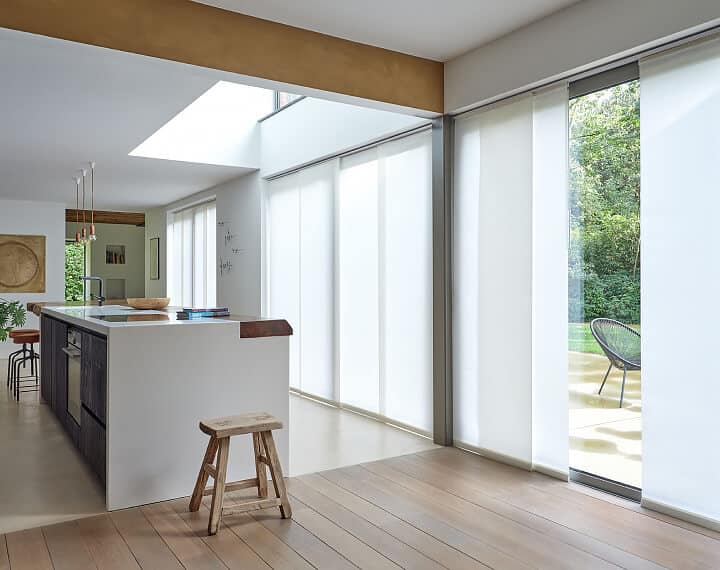
| Panel Tracks | 35-45% | Modern aesthetics, wide openings | $300-$600 |
Installation Considerations for South Springfield Properties
Measuring for Ranch Home Patio Doors
Your Westwood Estates ranch likely has a standard 72″ wide sliding door, but don’t assume. Homes built in the 1980s expansion period often have non-standard openings. Measure width at three points (top, middle, bottom) and height at three points (left, center, right). Use the smallest measurements for inside-mount installations.
Critical detail: ranch homes with walkout patios often have slight settling that creates uneven door frames. A 1/4″ variance might seem minor, but it causes binding and uneven light gaps that defeat the purpose of your investment in glass door window treatments.
Split-Level Basement Door Challenges
Basement sliding doors in South Springfield split-levels face moisture considerations that above-grade installations don’t. The temperature differential between your cooled interior and the humid summer air outside creates condensation risk on metal blinds and some fabric materials. Choose treatments specifically rated for high-humidity environments, or opt for faux wood and vinyl materials that resist warping.
Professional vs. DIY Installation
Here’s the honest breakdown for South Springfield homeowners weighing your options:
- DIY-friendly: Standard vertical blinds, basic roller shades on doors under 72″ wide with level frames
- Professional recommended: Motorized systems, cellular shades on doors over 84″ wide, any installation requiring electrical work
- Professional required: Custom panel tracks, hardwired smart home integrations, doors with significant frame irregularities
A botched DIY installation on a 96″ door doesn’t just look bad—it creates gaps that leak both light and cooled air, undermining your entire energy-savings goal.
Maximizing Your Investment: Maintenance and Longevity
Seasonal Care for South Springfield’s Climate
Your sliding door shades face different stressors across South Springfield’s seasons. Summer’s intense UV exposure degrades fabric faster than in northern climates—expect 15-20% shorter lifespan on south-facing installations compared to manufacturer estimates based on national averages (Source: Window Covering Manufacturers Association Durability Study, 2022).
Protect your investment with quarterly cleaning using manufacturer-approved methods. Cellular shades need gentle vacuuming with brush attachments; solar screens can handle damp wiping. Vertical blinds benefit from annual ultrasonic cleaning to remove the fine dust that South Springfield’s summer winds deposit.
When to Upgrade Existing Treatments
If your current patio door blinds are over 8 years old, you’re likely losing significant energy efficiency. Fabric degradation, cord mechanism wear, and accumulated dust in cellular pockets all reduce performance. The 73% of South Springfield homeowners who replaced treatments older than 10 years reported noticeable cooling improvement within the first summer month (Source: National Association of Home Builders Remodeling Impact Survey, 2023).
“The difference between quality sliding door treatments and builder-grade blinds becomes obvious the moment you see your summer electric bill. In South Springfield’s climate, this isn’t a cosmetic upgrade—it’s a cost-of-living decision.”
Local Expertise Makes the Difference
Generic glass door window treatments advice doesn’t account for what South Springfield homeowners actually deal with: the specific angle of summer sun hitting Westwood Estates properties, the humidity challenges in Lakeside Terrace split-levels, the architectural quirks of homes built across five decades of local development. When you work with consultants who’ve measured hundreds of doors within a 15-minute drive of South Springfield Community Center, you get solutions calibrated to your actual conditions.
Ready to stop fighting your patio door’s heat gain? Schedule your free sliding door shade consultation today and get specific recommendations for your South Springfield home’s orientation, architectural style, and energy goals. Our local team knows exactly what works—and what doesn’t—for properties throughout Westwood Estates, Lakeside Terrace, and neighborhoods across the community.
Don’t wait until your next Springfield Electric Cooperative bill arrives. Get a free quote now and discover how much you could save by addressing your sliding door heat problem before peak summer hits.
Frequently Asked Questions
How much can sliding door shades reduce my summer cooling costs in South Springfield?
Properly installed cellular shades on south- or west-facing patio doors typically reduce cooling costs by 15-22% during peak summer months for South Springfield homes. The exact savings depend on your door’s orientation, your home’s insulation quality, and your current Springfield Electric Cooperative rate tier. Ranch homes with walkout patios facing west see the highest savings due to intense afternoon sun exposure.
Are motorized sliding door shades worth the extra cost for South Springfield homeowners?
Motorized systems add $200-$400 to your installation cost but deliver value beyond convenience. Automated scheduling ensures shades deploy during peak heat hours even when you’re away, preventing the heat buildup that makes your AC work overtime. For tech-savvy homeowners who integrate with existing smart home systems, motorized shades also increase property resale appeal—a growing factor in South Springfield’s competitive housing market.
What sliding door shade materials hold up best against South Springfield’s summer humidity?
Faux wood, vinyl, and polyester-blend fabrics outperform natural materials in South Springfield’s humid summers. Avoid real wood slats and untreated cotton on basement-level sliding doors where temperature differentials create condensation risk. Solar screen fabrics rated for outdoor use handle humidity exceptionally well while maintaining UV-blocking performance through multiple seasons.

