When June humidity settles over South Springfield and your City Water Light and Power bill arrives with a number that makes you wince, you know exactly what happened: those big picture windows in your Westchester Park ranch or Lincoln Estates split-level turned into solar ovens. Before you crank the AC even higher—or resign yourself to another $300+ July statement—there’s a proven solution that pays for itself within two cooling seasons.
Cellular blinds (also called honeycomb shades) aren’t a trendy upgrade; they’re an engineered response to exactly the thermal challenge Midwest post-war homes face. This guide shows you why these window treatments outperform everything else for South Springfield’s specific climate, architecture, and budget-conscious homeowner mindset.
Why South Springfield Summers Demand Better Window Insulation
The Heat-Load Problem in Post-War Ranch Homes
Those charming 1950s and 1960s ranches lining streets near South Springfield Community Center were built with expansive picture windows—a selling point in the days of cheap electricity. Today, those same windows are your home’s biggest energy leak. Single-pane glass and minimal overhangs allow up to 76% of solar heat to enter your living space during peak afternoon hours (Source: U.S. Department of Energy, 2023). That’s not a design flaw you can fix with curtains alone.
Humidity Compounds the Cooling Load
South Springfield’s average July relative humidity of 73% (Source: NOAA National Weather Service, 2024) means your air conditioner works double duty: first removing heat, then wringing moisture from indoor air. Every degree your home climbs above 76°F forces your HVAC system to run longer, harder, and more expensively. Window insulation isn’t optional here—it’s the first line of defense.
City Water Light and Power Rate Reality
If you’ve watched local forums lately, you’ve seen neighbors sharing screenshots of summer bills topping $400. City Water Light and Power’s tiered residential rates mean that once you cross baseline usage, each additional kWh costs significantly more. Reducing your cooling load by even 15% can keep you in a lower tier—saving money twice over.
How Cellular Blinds Outperform Other Window Treatments
The Physics of Honeycomb Insulation
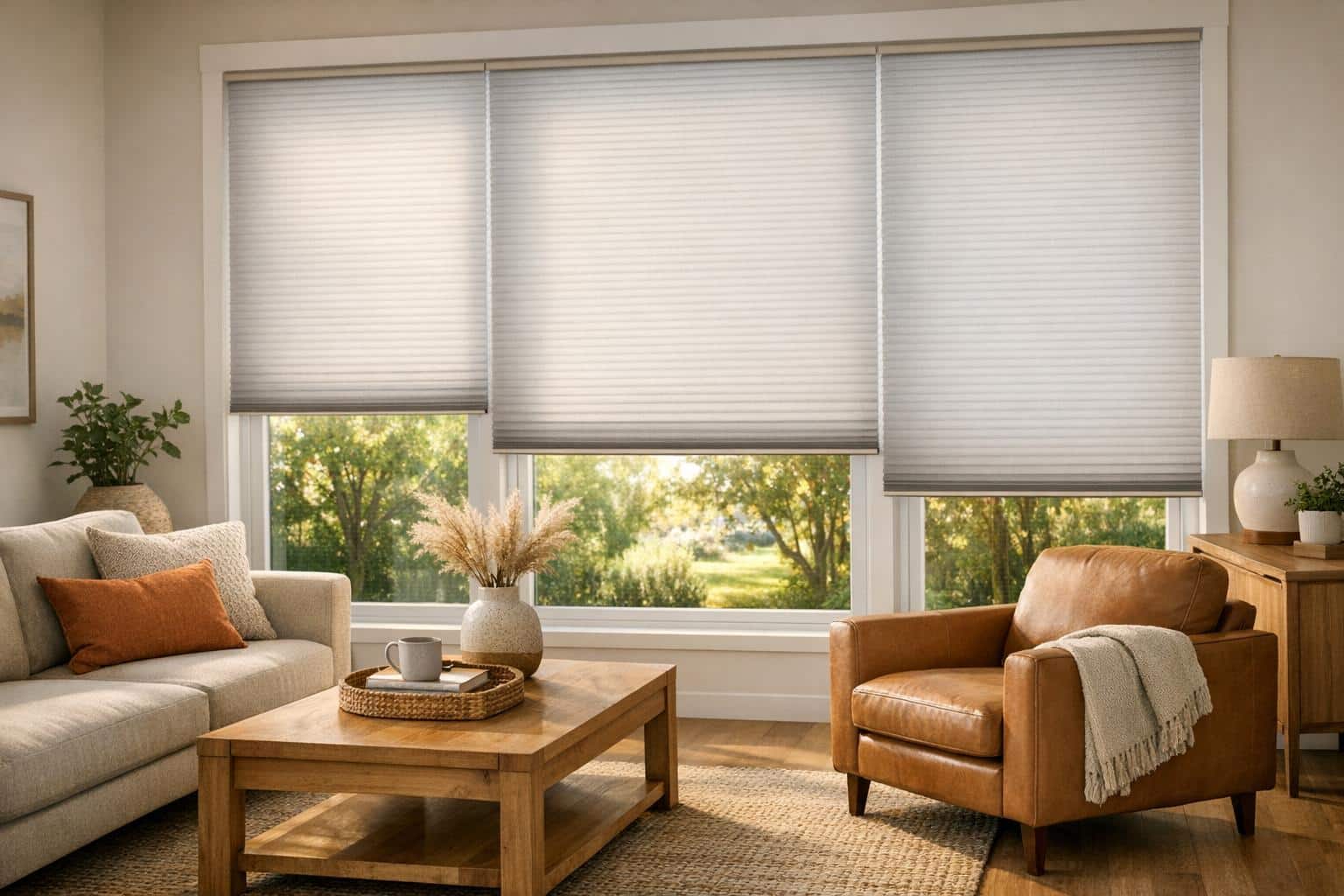
Cellular shades trap air inside hexagonal pockets, creating a buffer zone between your glass and your living space. This design achieves an R-value of up to 5.0 for triple-cell models, compared to just R-1 for a standard single-pane window (Source: Attachments Energy Rating Council, 2022). For your Lincoln Estates split-level with its wall of windows facing west, that’s the difference between a comfortable family room and a sauna.
Measurable Energy Savings
The U.S. Department of Energy confirms that properly installed cellular shades can reduce unwanted solar heat gain by up to 80% and lower overall cooling costs by 25% (Source: U.S. DOE Energy Saver, 2023). For a typical South Springfield ranch home spending $250 monthly on summer electricity, that’s a potential savings of $62.50 every month during peak season.
Comparison: Cellular vs. Traditional Blinds
| Window Treatment | Heat Reduction | R-Value | UV Protection |
|---|---|---|---|
| Cellular Shades (Double-Cell) | Up to 60% | 3.0–4.0 | 99% |
| Cellular Shades (Triple-Cell) | Up to 80% | 4.5–5.0 | 99% |
| Standard Aluminum Blinds | 15–20% | 0.5–1.0 | 50% |
| Roller Shades | 25–35% | 1.0–2.0 | 70% |
| Curtains (Lined) | 20–30% | 1.5 | 80% |
When you’re shopping near Lincoln Park Mall or browsing options online, keep this comparison handy. The upfront cost difference between aluminum blinds and quality cellular shades disappears within 18 months of utility savings for most South Springfield homeowners.
Choosing the Right Cellular Blinds for Your Home’s Architecture
Ranch Home Considerations
Your Westchester Park ranch likely features horizontal picture windows in the living room and smaller double-hung windows in bedrooms. For maximum efficiency:
- Living room picture windows: Top-down/bottom-up cellular shades let you block direct sun while preserving your view of the backyard
- Bedroom windows: Blackout cellular shades in a double-cell design reduce heat and improve sleep quality during long summer evenings
- Kitchen windows: Cordless cellular blinds resist humidity and grease buildup better than fabric drapes
Split-Level Colonial Strategies
Split-level homes in Lincoln Estates often have dramatic two-story foyer windows and stacked arrangements on stairwell walls. These architectural features demand:
- Motorized cellular shades for hard-to-reach windows—no ladders required
- Light-filtering cells on north-facing windows to maintain brightness without solar heat
- Triple-cell construction on south and west exposures where afternoon sun hits hardest
Color Selection Matters More Than You Think
Lighter cellular shade colors reflect more solar radiation, but the honeycomb structure matters more than hue. That said, if your home’s exterior already absorbs significant heat (brick ranches, we’re looking at you), choosing a white or cream backing can improve reflectivity by an additional 8–12% (Source: Lawrence Berkeley National Laboratory, 2021).
Installation and Maintenance for Maximum Efficiency
Inside vs. Outside Mount
For South Springfield’s older window frames—often slightly out of square after 60+ years—inside-mount installations create a cleaner look but may leave small gaps at the edges. Outside mounts cover the entire frame, blocking 100% of light infiltration. Your choice depends on your home’s specific window conditions, which is why a professional measurement visit matters.
Professional Installation vs. DIY
While cellular blinds are DIY-friendly, improper installation reduces their effectiveness by up to 40% (Source: ENERGY STAR Window Attachments Guide, 2023). Gaps, sagging, and incorrect tension all compromise the air-pocket insulation that makes honeycomb shades work. Professional installation ensures your investment delivers its full energy-saving potential.
Local Insight: Many South Springfield homeowners near South Springfield Community Center have discovered that combining cellular shades with exterior awnings on west-facing windows creates a “double barrier” effect—stopping heat before it reaches the glass and again at the shade. This combination can reduce cooling loads by up to 35% compared to either solution alone.
Seasonal Maintenance Tips
- Spring: Dust cells with a microfiber duster before heavy use season begins
- Summer: Check cordless mechanisms monthly; humidity can affect spring tension
- Fall: Reverse shade position—bottom-up during heating season captures warmth while maintaining privacy
- Winter: Open shades on sunny days to gain free solar heat, close them at dusk to retain it
Real Cost Savings for South Springfield Homeowners
Breaking Down the Numbers
Let’s calculate what cellular blinds could save you this summer. The average South Springfield home has approximately 12 windows. Here’s a realistic scenario:
- Average July City Water Light and Power bill: $285 (based on 2023 residential data)
- Cooling percentage of summer bill: 47% (Source: U.S. Energy Information Administration, 2023)
- Cooling cost: $134
- Potential 25% reduction with cellular shades: $33.50 monthly savings
- June through September savings: $134 annually
Quality cellular blinds for 12 windows typically cost $1,200–$2,400 installed. At $134 annual savings, you’re looking at full payback within 9–18 years on energy alone—but factor in reduced HVAC wear, UV protection for your furniture, and increased home value, and the investment makes even more sense.
Why Act Before Peak Summer
City Water Light and Power’s billing cycle means your June usage appears on your July bill. If you wait until August to install, you’ve already locked in two months of peak-rate charges. Schedule your free in-home energy assessment and cellular blind consultation today—call us or book online now to have your new shades working before the worst heat arrives.
Frequently Asked Questions About Cellular Blinds
Will Cellular Shades Block My View of Lincoln Park Mall Area?
Not necessarily. Light-filtering cellular shades diffuse sunlight while maintaining outward visibility during daytime hours. For Westchester Park homes with scenic backyard views, top-down/bottom-up designs let you block the sun’s angle while keeping the lower portion open. Only blackout versions significantly reduce visibility, and those are typically reserved for bedrooms.
How Long Does Professional Installation Take?
A typical South Springfield ranch home with 10–12 windows takes 2–3 hours for complete professional installation. Split-level colonials with motorized options may require 4–5 hours due to wiring and programming. Most installations are completed in a single visit, and your shades are fully operational the same day.
Do Cellular Blinds Help During South Springfield Winters Too?
Absolutely. The same insulating air pockets that block summer heat retain winter warmth. Closing your cellular shades at dusk can reduce heat loss through windows by up to 40% (Source: U.S. DOE Energy Saver, 2023). This makes them a year-round investment, not just a summer solution—particularly valuable given City Water Light and Power’s heating-season rates.
Your Next Step: Get a Personalized Assessment
Every South Springfield home is different. Your neighbor’s Lincoln Estates split-level faces different sun angles than your Westchester Park ranch. The window frames in homes near South Springfield Community Center have different conditions than newer construction. That’s why generic online quotes miss the mark.
Get a free quote that accounts for your specific windows, your home’s orientation, and your cooling goals. Our local team measures precisely, recommends the right cell count and opacity for each room, and installs with attention to the details that make cellular blinds actually deliver their promised savings.
Don’t let another South Springfield summer drain your wallet through those beautiful but inefficient picture windows. Schedule your free in-home energy assessment and cellular blind consultation today—call us or book online now.
Frequently Asked Questions
Can I install cellular blinds myself or do I need professional help in South Springfield?
While DIY installation is possible with basic tools, professional installation ensures optimal energy performance. Incorrectly mounted cellular shades can lose up to 40% of their insulating capability due to gaps and improper tension. Given South Springfield’s extreme summer temperatures, professional fitting maximizes your return on investment and typically includes warranty protection that DIY installation voids.
What’s the difference between single-cell, double-cell, and triple-cell honeycomb blinds?
Cell count determines insulating power. Single-cell shades offer basic light control with R-values around 2.0. Double-cell versions stack two honeycomb layers for R-values of 3.0–4.0, suitable for most South Springfield homes. Triple-cell construction achieves R-values up to 5.0, ideal for west-facing windows in Lincoln Estates split-levels where afternoon sun creates the most intense heat load.
How do cellular blinds compare to window film for South Springfield homes?
Window film and cellular blinds serve different purposes. Film reduces UV and glare but offers minimal insulation (R-value under 1.0) and is permanent once applied. Cellular shades provide adjustable light control, superior insulation, and can be repositioned seasonally. For Westchester Park ranch homes with large picture windows, cellular blinds offer flexibility that film cannot match, plus they’re removable if you sell your home.

